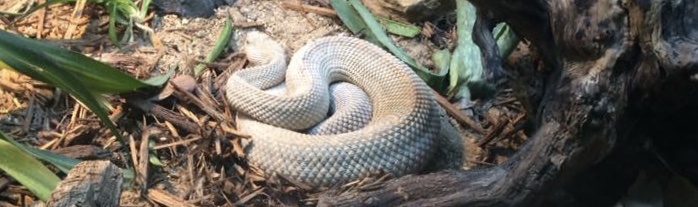
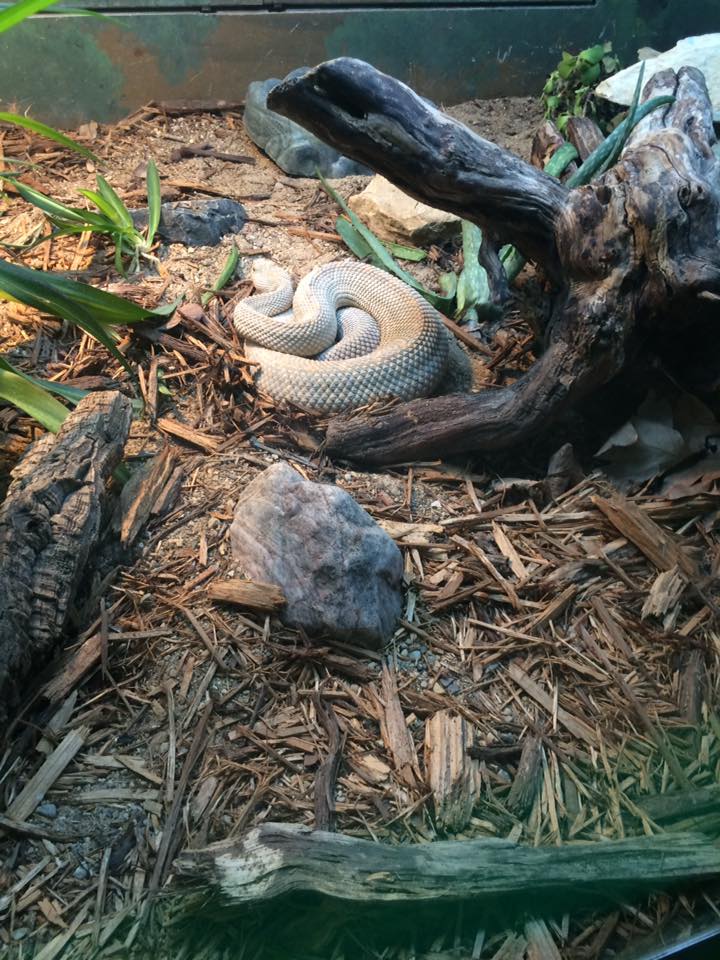
ANIMAL:Aruba Island Rattlesnake Crotalus unicolor
Type of Animal:
Viper
Habitat:
Rocky hills/hillsides, dry rocky areas, terraced mountainsides w/ igneous rock & dry stream beds, diabase mountains, limestone plateaus, dunes, desert, scrub forest, dry rocky cactus scrub, thornscrub, dry thorny acacia bush, rocky sandy cactus/thornscrub fields adjacent to rocky hillsides
Location(s):
Aruba
Appearance:
Ranges from light brown to tan to pinkish w/ somewhat darker brown diamond-shaped markings (often faded & can be any shade of brown, slate, whitish, & apricot), markings sometimes virtually invisible or only visible in narrow stripe down middle of back, often fairly uniform colored snake
Food/Diet:
Small mammals, birds, lizards, frogs
Status in Wild:
Critically Endangered
Conservation:
Breeding in zoos & wildlife centers. American Zoo & Aquarium Association (AZA) Aruba Island Rattlesnake Species Survival Plan (SSP) helped establish Arikok National Park on E coast of Aruba. Possible reintroductions into parts of Aruba.
Lifestyle:
Solitary or small groups of 2-5 snakes
Additional Info:Called:
Male
Female
Young: Snakelet
Group: Rhumba
Weight:
Male: 3 lbs
Female: 2 lbs
Gestation:
4 months
Life Span:
15-20 years
Body Length:
Male: 2.5-3 ft
Female: 2-2.5 ft
Young: 1 ft
Tail Length:
0.83 in, same for both sexes
Main predators are caracaras, merlins, ospreys, pigs, & boa constrictors.
Critically endangered due to development, tourism, habitat loss/destruction, charcoal/firewood industry, restricted range, killing out of fear, aloe cultivation, hunting for rattles/meat, wildlife trade, livestock overgrazing, competition w/ introduced boa constrictors over food, & predation by boa constrictors.
Like all rattlesnakes, they’re ovoviviparous, w/ eggs hatching in mom’s body, resulting in 5-15 live young.
There may only be 230 of these snakes left in wild.
Sexually mature at 3-4 years old.
Camouflage helps aid in catching prey.
Like all rattlesnakes, rattle used to warn threats.
Most active in early morning & late afternoon but more nocturnal when very hot.
Like all pit-vipers, they have heat-sensing pits on side of face helping locate prey by body heat.
Fun Fact(s):
While fairly docile, these snakes extremely venomous w/ venom being mix of hemotoxins (targeting red blood cells), neurotoxins (attacking brain/peripheral nervous system), & myotoxins (causing severe muscle necrosis). Like all rattlesnakes, they shouldn’t be approached.
Improved public image & increased education has elevated these snakes to being important national symbols in Aruba, even appearing on currency/postage stamps.
Called Cascabel in Papiamento (Creole language derived from Portuguese & Spanish spoken in Dutch Caribbean).
Aruba Island Rattlesnake, Brookfield Zoo, taken by me